World stock markets fell Tuesday as investors worried that any swine flu pandemic could derail a global economic recovery as the World Health Organization said it was now too late to contain the virus and urged countries to do what they can to mitigate the effects.
In morning trading London time, the FTSE 100 of leading British shares was down 84.75 points, or 2 percent, at 4,082.26 while Germany's DAX fell 119.11 points, or 2.5 percent, to 4,574.96. The CAC-40 in France was down 69.32 points, or 2.2 percent, at 3,033.22.
The disease, which broke out in Mexico just days ago, has spread to Europe and testing of suspected cases was underway around the world. Governments everywhere have toughened their precautions and the World Health Organization raised its alert level from three to four, which is just two steps short of it declaring a full pandemic.
Though all 150 suspected deaths and most of the 2,000 or infections have been seen in Mexico, investors around the world have decided to run for cover, abandoning riskier assets such as stocks and diving back into safe haven assets like the dollar and the yen.
"Equity markets have continued to sell off amid worries that the spread of the virus will undermine hopes of an economic recovery later this year," said Stuart Bennett, an analyst at Calyon Credit Agricole.
"Until further details are available with regard to the spread of the virus and its threat, concerns will remain at the forefront signaling that risk aversion will remain elevated," he added.
With all the uncertainty gripping the markets, Wall Street futures were pointing to a sharply lower opening. Dow futures were down 103 points, or 1.3 percent, at 7,899 while the broader Standard & Poor's 500 futures fell 13.70 points, or 1.6 percent, to 843.10.
Earlier, Asia's markets took a pummeling with Japan's Nikkei index closing down 232.57 points, or 2.7 percent, to 8,493.77 and Hong Kong's Hang Seng ended 285.31 points, or 1.9 percent, lower at 14,555.11.
For the second day running, airlines and travel-related companies felt the brunt of the selling pressure. In Europe, Air France-KLM and Deutsche Lufthansa AG fell another 3 percent while British Airways PLC slumped a further 6 percent.
And in a repeat of Monday, pharmaceutical stocks, particularly those with high-profile anti-flu vaccines -- Switzerland's Roche Holding AG and GlaxoSmithkline PLC -- benefited amid the pandemic fears.
A potential pandemic wasn't the only distraction for investors, already uneasy about the results of the U.S. government's stress tests to gauge the health of the largest 19 banks.
The reports are set for release Monday, though Bank of America Corp. and Citigroup Inc. have been told by regulators the two will likely need to raise more capital, according to a Wall Street Journal report. The report suggested that Bank of America's capital shortfall could run into billions of dollars, which, in the current environment would likely be extremely difficult to raise through the private sector.
"Banks requiring capital will either need to consider further government support or to sell non-core assets. Financial stocks are likely to underperform in this environment," said Hans Redeker, an analyst at BNP Paribas.
Germany's Deutsche Bank AG was the worst-performing stock on the DAX, down over 4 percent, while in London Barclays PLC dropped over 4 percent and HSBC Holding PLC was down more than 3 percent. In Asia, Mizuho Financial Group slipped 2.0 percent in Tokyo.
On Monday, the Dow Jones industrial average suffered its first drop in three days, falling 51.29, or 0.6 percent, to 8,025.00, while the S&P 500 closed 8.72 points, or 1 percent, to 857.51.
Elsewhere in Asia, South Korea's Kospi retreated 3 percent to 1,300.24. Shanghai's main index was down 0.2 percent, Taiwan's stock measure dropped 1.9 percent while Australia's benchmark was down 0.6 percent.
Oil prices also fell foul of the swine flu concerns as investors worried about lower demand, with the June contract on the New York Mercantile Exchange down $1.39 at $48.75 a barrel. Prices shed $1.41 overnight to settle at $50.14.
In currencies, the dollar weakened to 95.59 yen from 96.37. Meanwhile, the euro was just above $1.30, having started the week above $1.3250 before investors rushed into the relative safe haven of the dollar.
Showing posts with label financial news. Show all posts
Showing posts with label financial news. Show all posts
Tuesday, April 28, 2009

Monday, February 9, 2009
SEC, Madoff agree to settle civil fraud case

The Securities and Exchange Commission on Monday announced an agreement with disgraced money manager Bernard Madoff that could eventually force him to pay a civil fine and return money raised from investors.
The partial judgment, which renders permanent a preliminary injunction that froze Madoff's assets after his arrest in December, must be approved by the judge overseeing the case in federal court in Manhattan.
The civil proceeding is separate from the criminal case against the prominent Wall Street figure, who is accused of bilking $50 billion from investors in what may be the largest Ponzi scheme in history. Madoff was arrested on Dec. 11 after allegedly confessing to his sons that he had stolen from investors for years.
Federal prosecutors have asked a judge to revoke the bail of Madoff, who has been confined to his Manhattan penthouse under house arrest. Madoff, who has not been indicted, is widely expected to eventually enter into a criminal deal with prosecutors in which he would plead guilty in exchange for some form of leniency.
The SEC said Madoff agreed to the partial judgment without admitting or denying the allegations in its civil complaint filed on Dec. 11. However, the agreement says Madoff cannot contest the "facts" of the complaint for the purposes of determining his obligation to pay civil fines and restitution — which will be specified later.
The SEC says the basic facts of the complaint are that Madoff committed a $50 billion fraud and told his sons his investment business was a sham. Madoff told them he had "absolutely nothing," that "it's all just one big lie," and was "basically, a giant Ponzi scheme," according to the complaint.
Madoff's defense attorney, Ira Sorkin, didn't immediately return a telephone call seeking comment Monday.
The fallout from the Madoff affair has been massive and has rocked a Wall Street already churning from the financial crisis. Thousands of victims who lost money investing with Madoff have been identified — including ordinary people and Hollywood celebrities — as well as big hedge funds, international banks and charities in the U.S., Europe and Asia.
The scandal also has brought disgrace to the SEC, which repeatedly ignored credible allegations about Madoff's operations brought to it over the course of decade. Congress and the agency's inspector general are investigating what caused the regulatory failure over Madoff and why SEC inspections of his business failed to detect the improprieties.
Thursday, January 22, 2009
Economic crisis hitting men harder than women
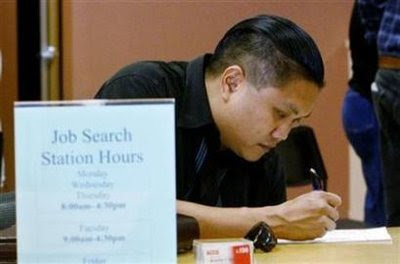
The economic crisis is hitting men much harder than women in the workplace, largely because male-dominated industries like construction and transportation are bearing the brunt of job losses, figures show.
Women, meanwhile, dominate sectors that are still growing, like government and healthcare, experts said.
"It's men that have taken the hit," said Andrew Sum, director of the Center for Labor Market Studies at Northeastern University in Boston. "It's been an overwhelmingly male phenomena."
Four-fifths of the 2.74 million people who lost their jobs between November 2007 and November 2008 were men, Sum said.
The biggest losses came in construction, where men comprise 87 percent of the work force, he said. Large losses also came in manufacturing and wholesale trade, where men make up more than two-thirds of the work force, he said.
"Males were dominant in sectors that were taking a bad hit," he said. "It's men and the blue-collar jobs. It's overwhelming."
According to the U.S. Bureau of Labor Statistics, men's employment as a ratio of the population dropped by 2.7 percent, while the ratio among women's dropped 0.8 percent from December 2007 to December 2008. The unemployment rate among men rose to 7.9 percent from 5.0, while among women, it rose to 6.4 percent from 4.8 percent, the agency said.
The gap between men's and women's unemployment is the highest since 1983, said Heather Boushey, senior economist at the Center for American Progress.
"The recession started with the collapse of the housing bubble," Boushey said. "Clearly we've seen significant layoffs in the construction industry and other sectors, and that really has been driving this problem."
Meanwhile, women are strongly represented in sectors that are still growing, experts noted.
Health and education sectors -- where three-quarters of workers are women -- added 536,000 jobs, Sum said.
Women office workers, like receptionists and clerical workers, have suffered losses. The sector, more than 70 percent female, has lost about 800,000 jobs, Sum said.
Women accounted for 102,000 of the 134,000 lost in the financial sector, Boushey said. But job loss in that industry has been relatively small, compared to manufacturing jobs, she said.
Women may see more job losses ahead in the financial sector, where they hold about 59 percent of jobs, Sum said.
"They're just beginning to lay off," he said. "I expect to see more business-related losses in the months ahead."
Thursday, January 15, 2009
Seven Surprising Stay-Home Salaries
Sales Representatives
More than ever, big companies are farming out their sales forces. But instead of jobs going overseas, they're going to the suburbs. According to the BLS, one in five sales reps telecommute. The highest paying sales jobs usually involve technical and scientific products. These sales jobs are more likely to require a bachelor's degree. Studying marketing, business, or communications can be excellent preparation for this line of work.
Stay-Home Salary: $68,270
Financial Analysts
Financial analysts help large companies and non-profit organizations figure out how, when, and where to invest their money. Often employed by investment banks, mutual funds, and insurance companies, the independent nature of the work lends itself to working from the home office. You'll need a bachelor's degree in finance, business administration, economics, or accounting to get in on the ground floor.
Stay-Home Salary: $70,400
Personal Financial Advisors
This is another high finance, home-office profession. Instead of working with large endowments, personal financial advisors help individuals manage their money, protect their assets, and plan for retirement. Financial advisors work for financial services firms or investment and planning firms. A minimum of a bachelor's degree in finance, business administration, or accounting is required.
Stay-Home Salary: $67,660
Web Designers
Two career paths that are particularly well suited to telecommuting are graphic design and computing. These career paths intersect for the job of Web developers, also called Web designers. These creative techies craft a Web site's look and make sure it functions. Most employers are looking for a bachelor's degree, and many schools offer programs specifically in Web site design.
Stay-Home Salary: $47,000 to $71,500
Software Developers
These tech-savvy telecommuters design and develop commuter applications. Therefore, they need to be well versed in programming languages as well as operating systems. A bachelor's degree in computer science or software engineering is required, but your education is likely to pay off. The BLS predicts 38 percent growth through 2016, making this one of the nation's fastest growing occupations.
Stay-Home Salary: $83,130
Accountant
Accounting is all about keeping the fiscal house in order--paying taxes, reporting earnings, analyzing budgets, and guiding investments. The individual nature of the work allows many accountants to routinely work from home. Certification and a degree in accounting are typical job requirements.
Stay-Home Salary: $57,060
Marketing Manager
Managers (in any department) are more likely to regularly work from home. Marketing managers may find creativity blooms with the freedom of the home office. Increasingly, a master's degree in business administration is becoming the norm for marketing managers, though a good track record and a bachelor's degree may suffice.
Stay-Home Salary: $104,400
The Truth Behind the Telecommute
Technically, to be considered a telecommuter you must regularly works eight or more paid hours at home each week. Telecommuting can cut down on a killer commute or carve out more time for the kids. It can help you find a better work-life balance. But let's be clear--there are a few things telecommuting is not designed for.
1. It is not a substitute for child care. Imagine trying to hold a conference call while entertaining your two-year-old.
2. It is not for the recluse. The key to successful telecommuting is communication, particularly with your supervisors.
3. It is not entry-level workers. According to the BLS Occupational Outlook Quarterly, it is far more effective for employees to make a case for telecommuting after proving their value.
Working at home can help you save on skyrocketing gas prices, but it makes financial sense for your employer, too. A study done for the Federal Reserve Bank of Dallas showed telecommuters earning $44,000 a year saved their company an average of $10,000. And, telecommuting options improve morale, productivity, and worker retention.
More than ever, big companies are farming out their sales forces. But instead of jobs going overseas, they're going to the suburbs. According to the BLS, one in five sales reps telecommute. The highest paying sales jobs usually involve technical and scientific products. These sales jobs are more likely to require a bachelor's degree. Studying marketing, business, or communications can be excellent preparation for this line of work.
Stay-Home Salary: $68,270
Financial Analysts
Financial analysts help large companies and non-profit organizations figure out how, when, and where to invest their money. Often employed by investment banks, mutual funds, and insurance companies, the independent nature of the work lends itself to working from the home office. You'll need a bachelor's degree in finance, business administration, economics, or accounting to get in on the ground floor.
Stay-Home Salary: $70,400
Personal Financial Advisors
This is another high finance, home-office profession. Instead of working with large endowments, personal financial advisors help individuals manage their money, protect their assets, and plan for retirement. Financial advisors work for financial services firms or investment and planning firms. A minimum of a bachelor's degree in finance, business administration, or accounting is required.
Stay-Home Salary: $67,660
Web Designers
Two career paths that are particularly well suited to telecommuting are graphic design and computing. These career paths intersect for the job of Web developers, also called Web designers. These creative techies craft a Web site's look and make sure it functions. Most employers are looking for a bachelor's degree, and many schools offer programs specifically in Web site design.
Stay-Home Salary: $47,000 to $71,500
Software Developers
These tech-savvy telecommuters design and develop commuter applications. Therefore, they need to be well versed in programming languages as well as operating systems. A bachelor's degree in computer science or software engineering is required, but your education is likely to pay off. The BLS predicts 38 percent growth through 2016, making this one of the nation's fastest growing occupations.
Stay-Home Salary: $83,130
Accountant
Accounting is all about keeping the fiscal house in order--paying taxes, reporting earnings, analyzing budgets, and guiding investments. The individual nature of the work allows many accountants to routinely work from home. Certification and a degree in accounting are typical job requirements.
Stay-Home Salary: $57,060
Marketing Manager
Managers (in any department) are more likely to regularly work from home. Marketing managers may find creativity blooms with the freedom of the home office. Increasingly, a master's degree in business administration is becoming the norm for marketing managers, though a good track record and a bachelor's degree may suffice.
Stay-Home Salary: $104,400
The Truth Behind the Telecommute
Technically, to be considered a telecommuter you must regularly works eight or more paid hours at home each week. Telecommuting can cut down on a killer commute or carve out more time for the kids. It can help you find a better work-life balance. But let's be clear--there are a few things telecommuting is not designed for.
1. It is not a substitute for child care. Imagine trying to hold a conference call while entertaining your two-year-old.
2. It is not for the recluse. The key to successful telecommuting is communication, particularly with your supervisors.
3. It is not entry-level workers. According to the BLS Occupational Outlook Quarterly, it is far more effective for employees to make a case for telecommuting after proving their value.
Working at home can help you save on skyrocketing gas prices, but it makes financial sense for your employer, too. A study done for the Federal Reserve Bank of Dallas showed telecommuters earning $44,000 a year saved their company an average of $10,000. And, telecommuting options improve morale, productivity, and worker retention.
Monday, January 12, 2009
Madoff to remain under house arrest
A judge ruled Monday that Bernard Madoff would not be sent to jail pending trial, declining a request by prosecutors to revoke the bail of the financier accused in a $50 billion fraud case.
Madoff has been under house arrest, with electronic monitoring, since posting $10 million bail against his $7 million Manhattan apartment, where he lives with his wife, and against his wife's homes in Montauk, N.Y., and Palm Beach, Fla.
U.S. Magistrate Judge Ronald Ellis of the U.S. District Court of the Southern District of New York added conditions to the bail, including "restrictions of transfer of all property whatsoever, wherever located" belonging to Madoff.
The judge also ruled that Madoff compile an inventory of all "valuable portable items" in his Manhattan home. The judge required that a security company check the inventory every two weeks and inspect outgoing mail.
"The decision speaks for itself and we intend to comply with the judge's order," said Madoff's defense attorney, Ira Lee Sorkin.
Janice Oh, spokeswoman for the prosecution, declined to comment.
Prosecutors have been trying to put Madoff behind bars since last week. That's when the U.S. Department of Justice filed documents to Ellis accusing Madoff of shipping five packages containing more than $1 million worth of diamond-studded jewelry to family and friends, in violation of bail.
Prosecutors said last Wednesday that Madoff was trying to protect these assets - which included 15 watches, four brooches, necklaces and rings - from seizure, preventing alleged victims from recovering their losses.
Last week, defense lawyer Sorkin said Madoff didn't know he violated bail when he mailed these "sentimental" items, and that some of the packages were actually sent by his wife.
Prosecutors on Thursday urged the judge once again to revoke bail, accusing Madoff of planning to transfer up to $300 million worth of assets - including 100 signed and ready-to-send checks found in his office, totaling $173 million.
But on Monday, the judge released a statement saying "the new information provided by the government does not demonstrate either a serious risk of flight or serious risk of obstruction of justice."
Madoff was arrested in December and charged with one count of securities fraud for allegedly stealing up to $50 billion from investors. If convicted, the 70-year-old could face up to 20 years in prison and a $5 million fine.
Madoff's alleged scheme disrupted an already fragile financial system, affecting hedge funds and well-heeled investors from Wall Street, Palm Beach and Europe. Alleged victims included Banco Santander (STD) in Spain and HSBC (HBC) in Britain, as well as director Steven Spielberg and actor Kevin Bacon.
In a Ponzi scheme, money from new investors is used to pay off early investors to create the appearance of legitimate returns.
Madoff has been under house arrest, with electronic monitoring, since posting $10 million bail against his $7 million Manhattan apartment, where he lives with his wife, and against his wife's homes in Montauk, N.Y., and Palm Beach, Fla.
U.S. Magistrate Judge Ronald Ellis of the U.S. District Court of the Southern District of New York added conditions to the bail, including "restrictions of transfer of all property whatsoever, wherever located" belonging to Madoff.
The judge also ruled that Madoff compile an inventory of all "valuable portable items" in his Manhattan home. The judge required that a security company check the inventory every two weeks and inspect outgoing mail.
"The decision speaks for itself and we intend to comply with the judge's order," said Madoff's defense attorney, Ira Lee Sorkin.
Janice Oh, spokeswoman for the prosecution, declined to comment.
Prosecutors have been trying to put Madoff behind bars since last week. That's when the U.S. Department of Justice filed documents to Ellis accusing Madoff of shipping five packages containing more than $1 million worth of diamond-studded jewelry to family and friends, in violation of bail.
Prosecutors said last Wednesday that Madoff was trying to protect these assets - which included 15 watches, four brooches, necklaces and rings - from seizure, preventing alleged victims from recovering their losses.
Last week, defense lawyer Sorkin said Madoff didn't know he violated bail when he mailed these "sentimental" items, and that some of the packages were actually sent by his wife.
Prosecutors on Thursday urged the judge once again to revoke bail, accusing Madoff of planning to transfer up to $300 million worth of assets - including 100 signed and ready-to-send checks found in his office, totaling $173 million.
But on Monday, the judge released a statement saying "the new information provided by the government does not demonstrate either a serious risk of flight or serious risk of obstruction of justice."
Madoff was arrested in December and charged with one count of securities fraud for allegedly stealing up to $50 billion from investors. If convicted, the 70-year-old could face up to 20 years in prison and a $5 million fine.
Madoff's alleged scheme disrupted an already fragile financial system, affecting hedge funds and well-heeled investors from Wall Street, Palm Beach and Europe. Alleged victims included Banco Santander (STD) in Spain and HSBC (HBC) in Britain, as well as director Steven Spielberg and actor Kevin Bacon.
In a Ponzi scheme, money from new investors is used to pay off early investors to create the appearance of legitimate returns.
Sunday, January 11, 2009
States with highest unemployment rates share root causes
Unlike the last recession, today's unemployment hot spots are all over the map.
The five states with the highest unemployment rates -- Michigan, Rhode Island, South Carolina, California and Oregon -- all have something in common, though: a heightened exposure to the root causes of this downward spiral.
The collapse of housing. The implosion of the auto industry. The meltdown of financial services. The exodus of manufacturing.
All states are feeling the pain, but the worst are getting hammered on multiple fronts:
-- The rotten housing market has punished California lenders and builders, taken an ax to Oregon's timber industry and soured the prospects for construction workers in Rhode Island, where buyers from neighboring states helped drive up home prices.
-- The steady decline of the manufacturing sector has punished Rhode Island and South Carolina, where laid-off factory workers lack the training and job opportunities in an increasingly high-tech economy.
-- The auto industry's pain is Michigan's above all. But it is also being felt in states like South Carolina, where German automaker BMW has cut 500 temporary workers, and in California, where many of dealerships have shut down.
"What makes this a different recession," said Rebecca Blank, an economist at the Brookings Institution, "is that it is so widespread."
During the 2001 recession, which was largely tied to the dot-com collapse, the West had a disproportionate amount of the jobless burden: Oregon, Washington, Alaska and California had the highest unemployment rates. (Mississippi and Washington, D.C. were tied with California.)
There is one region of the country that has largely avoided the country's real estate and manufacturing woes, and as a result has been spared the worst of the recession's pain.
A contiguous cluster of rural states -- Wyoming, North Dakota, South Dakota, Nebraska and Utah -- had the lowest unemployment rates in November, ranging from 3.2 percent to 3.7 percent. The Labor Department on Friday said the national jobless rate in December was 7.2 percent.
Historically high prices for energy and grains have been a boon to their economies, although recent declines in commodity prices are beginning to bite, economists said.
For the majority of the country, the air has come out of a decade-long housing bubble, with home prices falling an average of 20 percent in the past year and almost one in ten mortgages either overdue or in foreclosure. A wide swath of industries is feeling the pain, including real estate agents, bankers, builders, lumber companies and furniture makers.
The real estate bust is at the heart of mounting job losses in California, which has seen its unemployment rate reach 8.4 percent, the third-highest in the nation. In the year ending in November, 71 percent of the nonfarm jobs lost in California were housing-related.
Many of the nation's leading mortgage lenders -- Countrywide Financial, New Century Financial, IndyMac Bancorp, and Fremont General Corp. -- were based in California and have since been bought by larger banks or gone bankrupt.
The recently unemployed in California include Filemon Galvan, 41, of Buena Park, Calif., who was laid off from his job as a carpenter for a housing subcontractor in August.
"It's been a long time since we had a nice family outing," Galvan said in Spanish.
As the country's leading lumber producer, Oregon has also taken a direct hit from housing, with sawmills producing sharply less than a year ago. The slump has cost Oregon about 1,000 logging jobs in the past two years and more than 7,000 jobs in wood manufacturing, which includes plywood mills and the production of door and window frames, said David Cooke, an economist in Oregon's employment department.
Not even tiny Rhode Island, which has the nation's second-highest unemployment rate at 9.3 percent, has been exempt from the housing bust.
The slide has cost Rhode Island more than 3,000 construction jobs in the past year, according to the U.S. Labor Department.
Due to a combination of high energy prices, a strong dollar and competition from overseas, manufacturers have been manhandled for most of this decade -- and ground zero for the loss of factory jobs is Michigan. Its crumbling auto industry explains a large part of the state's nation-leading unemployment rate of 9.6 percent. Around the state, and across the country, the state's automakers have had to close plants and showrooms, cut back workers' hours and reduce wages as consumers' appetite for new cars dwindles along with their job security.
But the manufacturing slowdown has gone far beyond the industrial Midwest. South Carolina's jobless rate has reached 8.4 percent, the third-highest, as it struggles to replace lost textile and apparel manufacturing jobs with the type of high-tech industries that North Carolina has been able to attract.
And Rhode Island, not generally known as a manufacturing hub, has suffered. The industrial conglomerate Textron Inc., which is based in Providence and makes Cessna jets and Bell helicopters, laid off 2,200 of its 43,000 workers last year.
Most of the state's manufacturers are small, however, and have had a tough time weathering the credit crunch.
Lincoln, R.I. resident Larry Miller believed he would retire from the auto parts manufacturer where he first got a job as a newly married 26-year-old. That was two factory closings ago, the most recent being a plant owned by KIK Custom Products, which also had employed his wife.
"The word loyalty is gone," said Miller, shaking his head while sitting at his kitchen table. He found a new job in Massachusetts, but his wife is still looking.
Like South Carolina, the state hasn't yet made a successful transformation from manufacturing to newer-economy industries such as biotech or computing.
"I would summarize Rhode Island's economy as information age, hold the information," said Leonard Lardaro, an economist at the University of Rhode Island.
The five states with the highest unemployment rates -- Michigan, Rhode Island, South Carolina, California and Oregon -- all have something in common, though: a heightened exposure to the root causes of this downward spiral.
The collapse of housing. The implosion of the auto industry. The meltdown of financial services. The exodus of manufacturing.
All states are feeling the pain, but the worst are getting hammered on multiple fronts:
-- The rotten housing market has punished California lenders and builders, taken an ax to Oregon's timber industry and soured the prospects for construction workers in Rhode Island, where buyers from neighboring states helped drive up home prices.
-- The steady decline of the manufacturing sector has punished Rhode Island and South Carolina, where laid-off factory workers lack the training and job opportunities in an increasingly high-tech economy.
-- The auto industry's pain is Michigan's above all. But it is also being felt in states like South Carolina, where German automaker BMW has cut 500 temporary workers, and in California, where many of dealerships have shut down.
"What makes this a different recession," said Rebecca Blank, an economist at the Brookings Institution, "is that it is so widespread."
During the 2001 recession, which was largely tied to the dot-com collapse, the West had a disproportionate amount of the jobless burden: Oregon, Washington, Alaska and California had the highest unemployment rates. (Mississippi and Washington, D.C. were tied with California.)
There is one region of the country that has largely avoided the country's real estate and manufacturing woes, and as a result has been spared the worst of the recession's pain.
A contiguous cluster of rural states -- Wyoming, North Dakota, South Dakota, Nebraska and Utah -- had the lowest unemployment rates in November, ranging from 3.2 percent to 3.7 percent. The Labor Department on Friday said the national jobless rate in December was 7.2 percent.
Historically high prices for energy and grains have been a boon to their economies, although recent declines in commodity prices are beginning to bite, economists said.
For the majority of the country, the air has come out of a decade-long housing bubble, with home prices falling an average of 20 percent in the past year and almost one in ten mortgages either overdue or in foreclosure. A wide swath of industries is feeling the pain, including real estate agents, bankers, builders, lumber companies and furniture makers.
The real estate bust is at the heart of mounting job losses in California, which has seen its unemployment rate reach 8.4 percent, the third-highest in the nation. In the year ending in November, 71 percent of the nonfarm jobs lost in California were housing-related.
Many of the nation's leading mortgage lenders -- Countrywide Financial, New Century Financial, IndyMac Bancorp, and Fremont General Corp. -- were based in California and have since been bought by larger banks or gone bankrupt.
The recently unemployed in California include Filemon Galvan, 41, of Buena Park, Calif., who was laid off from his job as a carpenter for a housing subcontractor in August.
"It's been a long time since we had a nice family outing," Galvan said in Spanish.
As the country's leading lumber producer, Oregon has also taken a direct hit from housing, with sawmills producing sharply less than a year ago. The slump has cost Oregon about 1,000 logging jobs in the past two years and more than 7,000 jobs in wood manufacturing, which includes plywood mills and the production of door and window frames, said David Cooke, an economist in Oregon's employment department.
Not even tiny Rhode Island, which has the nation's second-highest unemployment rate at 9.3 percent, has been exempt from the housing bust.
The slide has cost Rhode Island more than 3,000 construction jobs in the past year, according to the U.S. Labor Department.
Due to a combination of high energy prices, a strong dollar and competition from overseas, manufacturers have been manhandled for most of this decade -- and ground zero for the loss of factory jobs is Michigan. Its crumbling auto industry explains a large part of the state's nation-leading unemployment rate of 9.6 percent. Around the state, and across the country, the state's automakers have had to close plants and showrooms, cut back workers' hours and reduce wages as consumers' appetite for new cars dwindles along with their job security.
But the manufacturing slowdown has gone far beyond the industrial Midwest. South Carolina's jobless rate has reached 8.4 percent, the third-highest, as it struggles to replace lost textile and apparel manufacturing jobs with the type of high-tech industries that North Carolina has been able to attract.
And Rhode Island, not generally known as a manufacturing hub, has suffered. The industrial conglomerate Textron Inc., which is based in Providence and makes Cessna jets and Bell helicopters, laid off 2,200 of its 43,000 workers last year.
Most of the state's manufacturers are small, however, and have had a tough time weathering the credit crunch.
Lincoln, R.I. resident Larry Miller believed he would retire from the auto parts manufacturer where he first got a job as a newly married 26-year-old. That was two factory closings ago, the most recent being a plant owned by KIK Custom Products, which also had employed his wife.
"The word loyalty is gone," said Miller, shaking his head while sitting at his kitchen table. He found a new job in Massachusetts, but his wife is still looking.
Like South Carolina, the state hasn't yet made a successful transformation from manufacturing to newer-economy industries such as biotech or computing.
"I would summarize Rhode Island's economy as information age, hold the information," said Leonard Lardaro, an economist at the University of Rhode Island.
Tuesday, January 6, 2009
German tycoon Adolf Merckle commits suicide

German billionaire Adolf Merckle has committed suicide, in despair over the huge losses suffered by his business empire during the financial crisis, his family said on Tuesday.
The media-shy billionaire, whose family controls some of Germany's best-known companies, was hit by a train on Monday evening, local officials said.
"The desperate situation of his companies caused by the financial crisis, the uncertainties of the last few weeks and his powerlessness to act, have broken the passionate family entrepreneur and he took his own life," a family statement said.
State prosecutors from the southern city of Ulm said Merckle, 74, left work on Monday and died after being hit by a train near the town of Blaubeuren. He left behind a suicide note to his family, they added.
There was no sign of anyone else being involved, they said.
In 2008 Merckle was ranked as the world's 94th-richest person and Germany's fifth-wealthiest by Forbes magazine.
On Tuesday pale blood stains still dotted the snow along the railway track where he died. The area looked deserted apart from a police car nearby.
Merckle, a father of four, inherited the basis of his fortune from his Bohemian grandfather, but went on to build up the chemical wholesale company into Germany's largest drugs wholesaler.
The passionate skiier and mountain climber assembled a business conglomerate with about 100,000 employees and 30 billion euros ($40.45 billion) in annual sales.
His family controls a number of German companies including cement maker HeidelbergCement and generic drug company Ratiopharm.
But the empire was rocked last year by wrong-way bets made on shares in Volkswagen after a surprise stakeholding announcement from Porsche sent the VW share price rocketing as short sellers scrambled to cover their positions.
Banking sources had told Reuters the family lost hundreds of millions of euros on investments, with about 400 million euros lost on Volkswagen shares alone.
Since then the family has been in talks for weeks with banks to renegotiate loans. Banking sources said on Tuesday his death was not expected to affect loan agreements with the family.
Shares in HeidelbergCement fell as much as 12.5 percent following the news of Merckle's death and ended the day down 6.2 percent at 31.25 euros.
"Some investors are afraid that there will be no one to lead negotiations during this sensitive situation for the company," one trader in Frankfurt said.
Psychologists and other mental health experts have said suicide rates could creep up as a result of the financial crisis.
Last month Frenchman Thierry Magon de la Villehuchet, 65, a co-founder of money manager Access International, was found dead in a New York office building, reportedly distraught over losing up to $1.4 billion in client money to Bernard Madoff's alleged fraud. He slit his wrists with box cutters.
Monday, January 5, 2009
Regulators probed Madoff eight times over 16 years
Bernard L. Madoff Investment Securities LLC was examined at least eight times in 16 years by the U.S. Securities and Exchange Commission (SEC) and other regulators, who often came armed with suspicions, the Wall Street Journal said.
SEC officials followed up on emails from a New York hedge fund that described Bernard Madoff's business practices as "highly unusual," the paper said.
The Financial Industry Regulatory Authority, the industry-run watchdog for brokerage firms, reported in 2007 that parts of the firm appeared to have no customers, according to the paper.
Madoff was interviewed at least twice by the SEC, the paper said, adding that regulators never came close to uncovering the alleged $50 billion Ponzi scheme that investigators now believe began in the 1970s.
The SEC could not be immediately reached for comment by Reuters.
The serial regulatory failures will be on display on Monday when Congress holds a hearing to probe why the alleged fraud went undetected, according to the Journal.
Among the key witnesses is SEC Inspector General David Kotz, who was asked last month by the agency's chairman, Christopher Cox, to investigate the mess, the paper said.
SEC officials followed up on emails from a New York hedge fund that described Bernard Madoff's business practices as "highly unusual," the paper said.
The Financial Industry Regulatory Authority, the industry-run watchdog for brokerage firms, reported in 2007 that parts of the firm appeared to have no customers, according to the paper.
Madoff was interviewed at least twice by the SEC, the paper said, adding that regulators never came close to uncovering the alleged $50 billion Ponzi scheme that investigators now believe began in the 1970s.
The SEC could not be immediately reached for comment by Reuters.
The serial regulatory failures will be on display on Monday when Congress holds a hearing to probe why the alleged fraud went undetected, according to the Journal.
Among the key witnesses is SEC Inspector General David Kotz, who was asked last month by the agency's chairman, Christopher Cox, to investigate the mess, the paper said.
Monday, December 22, 2008
AP study finds $1.6B went to bailed-out bank execs
The 116 banks that so far have received taxpayer dollars to boost them through the economic crisis gave their top tier of executives nearly $1.6 billion in salaries, bonuses and other benefits in 2007, an Associated Press analysis found.
That amount, spread among the 600 highest paid bank executives, would cover the bailout money given to several banks that have shared in the $188 billion that Washington has doled out in rescue packages so far.
Some banks trimmed their executive compensation in the face of faltering performance that foreshadowed the current economic crisis, but they still granted multimillion-dollar packages. Benefits included cash bonuses, stock options, personal use of company jets and chauffeurs, home security, country club memberships and professional money management, the AP review of federal securities documents found.
Such bonuses amount to a bribe for executives "to get them to do the jobs for which they are well paid in the first place," said Rep. Barney Frank, the Massachusetts Democrat who chairs the House Financial Services committee.
"Most of us sign on to do jobs, and we do them best we can," said Frank. "We're told that some of the most highly paid people in executive positions are different. They need extra money to be motivated!"
The AP review of annual reports that the banks file with the Securities and Exchange Commission found that the average paid to each of the banks' top executives was $2.6 million in salary, bonuses and benefits.
Among other findings:
-- Lloyd Blankfein, president and chief executive of Goldman Sachs, took home nearly $54 million in compensation last year. The company's top five executives received a total of $242 million.
This year, Goldman's seven top-paid executives will work for their base salaries of $600,000, with no stock or cash bonuses, the company said. Last spring, before Wall Street's staggering losses and layoffs mushroomed, Goldman described its pay plan as essential to retain and motivate executives "whose efforts and judgments are vital to our continued success, by setting their compensation at appropriate and competitive levels." Goldman spokesman Ed Canaday declined to comment beyond that written report.
The New York-based company, after gains last year, on Dec. 16 reported its first quarterly loss since it went public in 1999. It received $10 billion in taxpayer money on Oct. 28.
-- Even where banks cut back on pay, some executives were left with seven- or eight-figure compensation that most people can only dream about. Richard D. Fairbank, the chairman of Capital One Financial Corp., took a $1 million hit in compensation after his company had a disappointing year, but still got $17 million in stock options. The McLean, Va.-based company received $3.56 billion in bailout money on Nov. 14.
-- John A. Thain, chief executive of Merrill Lynch, topped all corporate bank bosses with $83 million in earnings last year. Thain, a former chief operating officer for Goldman Sachs, came to Merrill Lynch in December 2007, avoiding the blame for a year in which Merrill lost $7.8 billion. Since he began work late in the year, he earned $57,692 in salary, a $15 million signing bonus and an additional $68 million in stock options.
Like Goldman, Merrill tapped taxpayers for $10 billion on Oct. 28.
The AP review comes amid sharp questions about the banks' commitment to the goals of the Troubled Assets Relief Program, a law designed to buy bad mortgages and other troubled assets. Last month, the Bush administration changed the program's goals, instructing the Treasury Department to pump tax dollars directly into banks to prevent wide economic collapse.
The program set restrictions on some executive compensation for participating banks, but did not limit salaries and bonuses unless they had the effect of encouraging excessive risk to the institution. Banks were barred from giving golden parachutes to departing executives and deducting some executive pay for tax purposes. Some banks are forgoing bonuses and restricting other compensation.
The records detailing last year's pay packages show that personal financial advice was among the executive perks. Wells Fargo of San Francisco, which took $25 billion in taxpayer bailout money, gave its top executives up to $20,000 each to pay financial planners.
At Bank of New York Mellon Corp., chief executive Robert P. Kelly's stipend for financial planning services came to $66,748, on top of his $975,000 salary and $7.5 million bonus. His car and driver cost $178,879. Kelly also received $846,000 in relocation expenses, including help selling his home in Pittsburgh and purchasing one in Manhattan, the company said.
Goldman Sachs, paying as much as $233,000 for an executive's car and driver, told its shareholders that financial counseling and chauffeurs were needed so executives would have more time to focus on their jobs.
JPMorgan Chase chairman James Dimon ran up a $211,182 tab for private jet travel last year when his family lived in Chicago and he was commuting to New York. The company received $25 billion in bailout funds.
Banks cite security to justify personal use of company aircraft for some executives. But Rep. Brad Sherman, D-Calif., questioned that rationale, saying executives visit many locations more vulnerable than the nation's security-conscious commercial air terminals.
Sherman, a member of the House Financial Services Committee, said pay excesses undermine development of good bank economic policies and promote an escalating pay spiral among competing financial institutions -- something particularly hard to take when banks then ask for rescue money.
He wants them to come before Congress, like the automakers did, and spell out their spending plans for bailout funds.
"The tougher we are on the executives that come to Washington, the fewer will come for a bailout," he said.
That amount, spread among the 600 highest paid bank executives, would cover the bailout money given to several banks that have shared in the $188 billion that Washington has doled out in rescue packages so far.
Some banks trimmed their executive compensation in the face of faltering performance that foreshadowed the current economic crisis, but they still granted multimillion-dollar packages. Benefits included cash bonuses, stock options, personal use of company jets and chauffeurs, home security, country club memberships and professional money management, the AP review of federal securities documents found.
Such bonuses amount to a bribe for executives "to get them to do the jobs for which they are well paid in the first place," said Rep. Barney Frank, the Massachusetts Democrat who chairs the House Financial Services committee.
"Most of us sign on to do jobs, and we do them best we can," said Frank. "We're told that some of the most highly paid people in executive positions are different. They need extra money to be motivated!"
The AP review of annual reports that the banks file with the Securities and Exchange Commission found that the average paid to each of the banks' top executives was $2.6 million in salary, bonuses and benefits.
Among other findings:
-- Lloyd Blankfein, president and chief executive of Goldman Sachs, took home nearly $54 million in compensation last year. The company's top five executives received a total of $242 million.
This year, Goldman's seven top-paid executives will work for their base salaries of $600,000, with no stock or cash bonuses, the company said. Last spring, before Wall Street's staggering losses and layoffs mushroomed, Goldman described its pay plan as essential to retain and motivate executives "whose efforts and judgments are vital to our continued success, by setting their compensation at appropriate and competitive levels." Goldman spokesman Ed Canaday declined to comment beyond that written report.
The New York-based company, after gains last year, on Dec. 16 reported its first quarterly loss since it went public in 1999. It received $10 billion in taxpayer money on Oct. 28.
-- Even where banks cut back on pay, some executives were left with seven- or eight-figure compensation that most people can only dream about. Richard D. Fairbank, the chairman of Capital One Financial Corp., took a $1 million hit in compensation after his company had a disappointing year, but still got $17 million in stock options. The McLean, Va.-based company received $3.56 billion in bailout money on Nov. 14.
-- John A. Thain, chief executive of Merrill Lynch, topped all corporate bank bosses with $83 million in earnings last year. Thain, a former chief operating officer for Goldman Sachs, came to Merrill Lynch in December 2007, avoiding the blame for a year in which Merrill lost $7.8 billion. Since he began work late in the year, he earned $57,692 in salary, a $15 million signing bonus and an additional $68 million in stock options.
Like Goldman, Merrill tapped taxpayers for $10 billion on Oct. 28.
The AP review comes amid sharp questions about the banks' commitment to the goals of the Troubled Assets Relief Program, a law designed to buy bad mortgages and other troubled assets. Last month, the Bush administration changed the program's goals, instructing the Treasury Department to pump tax dollars directly into banks to prevent wide economic collapse.
The program set restrictions on some executive compensation for participating banks, but did not limit salaries and bonuses unless they had the effect of encouraging excessive risk to the institution. Banks were barred from giving golden parachutes to departing executives and deducting some executive pay for tax purposes. Some banks are forgoing bonuses and restricting other compensation.
The records detailing last year's pay packages show that personal financial advice was among the executive perks. Wells Fargo of San Francisco, which took $25 billion in taxpayer bailout money, gave its top executives up to $20,000 each to pay financial planners.
At Bank of New York Mellon Corp., chief executive Robert P. Kelly's stipend for financial planning services came to $66,748, on top of his $975,000 salary and $7.5 million bonus. His car and driver cost $178,879. Kelly also received $846,000 in relocation expenses, including help selling his home in Pittsburgh and purchasing one in Manhattan, the company said.
Goldman Sachs, paying as much as $233,000 for an executive's car and driver, told its shareholders that financial counseling and chauffeurs were needed so executives would have more time to focus on their jobs.
JPMorgan Chase chairman James Dimon ran up a $211,182 tab for private jet travel last year when his family lived in Chicago and he was commuting to New York. The company received $25 billion in bailout funds.
Banks cite security to justify personal use of company aircraft for some executives. But Rep. Brad Sherman, D-Calif., questioned that rationale, saying executives visit many locations more vulnerable than the nation's security-conscious commercial air terminals.
Sherman, a member of the House Financial Services Committee, said pay excesses undermine development of good bank economic policies and promote an escalating pay spiral among competing financial institutions -- something particularly hard to take when banks then ask for rescue money.
He wants them to come before Congress, like the automakers did, and spell out their spending plans for bailout funds.
"The tougher we are on the executives that come to Washington, the fewer will come for a bailout," he said.
Thursday, December 18, 2008
Mortgage Refinancing
If you are a homeowner, now might be a good time to think about refinancing your mortgage.
Refinancing is when you apply for a secured loan in order to pay off another different loan secured against the same assets, property etc. If this original loan had a fixed interest rate mortgage which has now declined considerably, then you would like to avail of a new loan at a more favorable interest rate.
When is Refinancing an Option
Typically home refinancing is done when you have a mortgage on your home and apply for a second loan to pay off the first one. While taking the decision to go for the home refinancing option, it is important to first determine whether the amount you save on interests balances the amount of fees payable during refinancing.
Benefits of Home Refinancing
Imagine a scenario where you can have access to extra cash, while simultaneously lowering your monthly mortgage payment. This dream can become a reality through mortgage refinancing.
A house is the largest asset you may ever own. Likewise, your mortgage payment may be the largest expense you'll have in your monthly budget. Wouldn't it be great to use this asset to reduce your monthly payment and put extra cash in your pocket? When you refinance your mortgage, you can take advantage of the equity in your home and enable this to take place.
Lower Refinance Rate, Lower Payments
When you purchased your dream home, the financial environment dictated interest rates. While certain factors, like your credit rating and the amount of the down payment that you were able to afford, influenced your interest rate, the single most important factor was the prevailing rates at that moment. However, interest rates fluctuate. When the Federal Reserve enters a rate-cutting period, the prevailing rates may become significantly lower than when you originally purchased your home.
By refinancing your mortgage when interest rates are lower, you can exchange a higher interest rate for a lower one, which, in turn, will lower your monthly payment.
Shorten the Length of Your Mortgage when Refinancing
Another advantage of home refinancing is that you can shorten the term of your mortgage. Let's say, for example, that you originally had a 30-year mortgage and have been paying it for eight years. Thanks to mortgage refinancing, you can switch to a shorter term of either 10, 15 or 20 years. This can save you thousands of dollars of interest. Also, if the refinance rate is lower, but you maintain the same monthly payment, you will build up equity in your home more quickly, because more of your payment will be going towards principal.
Exchange an Adjustable Rate for a Fixed Refinance Rate
When interest rates are low, adjustable rate mortgages (ARMs) are the housing market's darlings. However, as interest rates increase, that adjustable rate may not look as sweet. It's also possible that you opted for an ARM because your financial future was less secure, or you weren't sure how long you'd stay in your home. If, however, you've become financially stable and know that you'll be staying in your home for several years, it may be beneficial to swap that fluctuating adjustable rate for a fixed one. You'll have more security knowing that your monthly payment will remain steady, regardless of the current market environment.
Refinancing is when you apply for a secured loan in order to pay off another different loan secured against the same assets, property etc. If this original loan had a fixed interest rate mortgage which has now declined considerably, then you would like to avail of a new loan at a more favorable interest rate.
When is Refinancing an Option
Typically home refinancing is done when you have a mortgage on your home and apply for a second loan to pay off the first one. While taking the decision to go for the home refinancing option, it is important to first determine whether the amount you save on interests balances the amount of fees payable during refinancing.
Benefits of Home Refinancing
Imagine a scenario where you can have access to extra cash, while simultaneously lowering your monthly mortgage payment. This dream can become a reality through mortgage refinancing.
A house is the largest asset you may ever own. Likewise, your mortgage payment may be the largest expense you'll have in your monthly budget. Wouldn't it be great to use this asset to reduce your monthly payment and put extra cash in your pocket? When you refinance your mortgage, you can take advantage of the equity in your home and enable this to take place.
Lower Refinance Rate, Lower Payments
When you purchased your dream home, the financial environment dictated interest rates. While certain factors, like your credit rating and the amount of the down payment that you were able to afford, influenced your interest rate, the single most important factor was the prevailing rates at that moment. However, interest rates fluctuate. When the Federal Reserve enters a rate-cutting period, the prevailing rates may become significantly lower than when you originally purchased your home.
By refinancing your mortgage when interest rates are lower, you can exchange a higher interest rate for a lower one, which, in turn, will lower your monthly payment.
Shorten the Length of Your Mortgage when Refinancing
Another advantage of home refinancing is that you can shorten the term of your mortgage. Let's say, for example, that you originally had a 30-year mortgage and have been paying it for eight years. Thanks to mortgage refinancing, you can switch to a shorter term of either 10, 15 or 20 years. This can save you thousands of dollars of interest. Also, if the refinance rate is lower, but you maintain the same monthly payment, you will build up equity in your home more quickly, because more of your payment will be going towards principal.
Exchange an Adjustable Rate for a Fixed Refinance Rate
When interest rates are low, adjustable rate mortgages (ARMs) are the housing market's darlings. However, as interest rates increase, that adjustable rate may not look as sweet. It's also possible that you opted for an ARM because your financial future was less secure, or you weren't sure how long you'd stay in your home. If, however, you've become financially stable and know that you'll be staying in your home for several years, it may be beneficial to swap that fluctuating adjustable rate for a fixed one. You'll have more security knowing that your monthly payment will remain steady, regardless of the current market environment.
Credit card holders livid about 'rate-jacking'

It arrived in Rich Stevens' mailbox a few weeks ago: the notice that Citibank had "rate-jacked" the Visa cards belonging to him and his wife.
In the blogosphere, writers are livid at the instant rate hikes -- called "rate-jacking."
Citigroup seems to be the target of most bloggers' venom -- partly because Citigroup issues so many credit cards and partly because Citi began sending the notices at about the same time it was getting a $20 billion, taxpayer-financed government bailout.
No one at Citigroup would talk on camera to CNN about the matter. Instead, the company issued a written statement, which said: "To continue funding in this difficult credit and funding environment, Citi is repricing a group of customers."
Citi told CNN that anyone unhappy with the new rates can opt out and continue paying the lower interest, but they must close their account when their card expires. It's all in the fine print.
Rep. Carolyn Maloney, D-New York, said she is sick of the fine print.
She agreed that credit card companies get away with whatever they want, as long at they put their desires into the fine print.
"They have this provision that says they can raise the rate -- any time, any reason," she said.
In September, Maloney got the House to pass by an overwhelming margin of 200 votes the "credit card holders' bill of rights," which would have stopped rate-jacking and the imposition of other fees by banks.
The chairman of the Senate Banking Committee is Christopher Dodd. His staff said the Connecticut Democrat has his own credit card bill containing tough language to stop things like rate-jacking and shortening of billing cycles -- two issues that anger consumers.
But even Dodd's own bill has failed to gain traction -- it has sat since July.
On Thursday, the Federal Reserve is expected to vote on its own new rules regarding credit cards, rules in the works for four years that could clamp down on rate-jacking.
Tuesday, December 16, 2008
Fed cuts target for key rate to record low
The Federal Reserve has cut its target for a key interest rate to the lowest level on record and pledged to use "all available tools" to combat a severe financial crisis and prolonged recession.
The central bank on Tuesday said it had reduced the federal funds rate, the interest that banks charge each other, to a range of zero to 0.25 percent. That is down from the 1 percent target rate in effect since the last meeting in October. Many analysts had expected the Fed to make a smaller cut to 0.5 percent.
The Fed's aggressive move was greeted enthusiastically by Wall Street. The Dow Jones industrial average rose about 210 points in late-afternoon trading.
The Fed's action and statement made clear that economic conditions have worsened since its last meeting in October.
Federal Reserve Chairman Ben Bernanke and his colleagues said they will use unconventional methods to try to contain a financial crisis that is the worst since the 1930s and a recession that is already the longest in a quarter-century. For example, the Fed last month said it planned to purchase up to $600 billion in direct debt and mortgage-backed securities issued by big financial players including Fannie Mae and Freddie Mac in an effort to boost the availability of mortgage loans.
That move was one of a series the central bank has taken to increase its loans by hundreds of billions of dollars as a way to deal with the worst financial crisis to hit the country in more than 70 years.
The Fed on Tuesday also made clear that it intends to keep the funds rate at extremely low levels.
"The committee anticipates that weak economic conditions are likely to warrant exceptionally low levels of the federal funds rate for some time," the central bank's panel that sets interest rates said in a statement.
Even before the announcement of a lower target, the funds rate has been trading well below the old target of 1 percent. For November, the funds rate had averaged 0.39 percent. Analysts said it was likely to fall further with the Fed setting the new target as low as zero.
The Fed's decision is expected to be quickly matched by a reduction in banks' prime lending rate, the benchmark rate for millions of business and consumer loans. Before the Fed announcement, the prime rate stood at 4 percent.
The Fed has never pushed its target for the federal funds rate as low as zero to 0.25 percent. The lowest target rate before had been 1 percent, a level seen only once before in the past half-century.
Given how low interest rates are, the central bank said it planned to use a variety of unconventional methods to flood the banking system with credit and drive interest rates lower.
"The Federal Reserve will employ all available tools to promote the resumption of sustainable economic growth and to preserve price stability," the Fed said.
The announcement on the deployment of unconventional methods had been expected given that Bernanke and other Fed officials have sought in recent comments to let financial markets know that the central bank will not be out of ammunition to battle the economic downturn even with the funds rate at such low levels.
In its statement Tuesday, the Fed said that since its last meeting in late October, "labor market conditions have deteriorated, and the available data indicate that consumer spending, business investment and industrial production have declined. Financial markets remain quite strained and credit conditions tight."
The central bank acknowledged that it had room to battle the economic weakness because inflation pressures have "diminished appreciably" as the price of energy and other commodities has fallen sharply.
The Fed action came only hours after the government announced that consumer prices dropped by a record amount of 1.7 percent in November, reflecting a record decline in the price of gasoline and other energy products.
The central bank on Tuesday said it had reduced the federal funds rate, the interest that banks charge each other, to a range of zero to 0.25 percent. That is down from the 1 percent target rate in effect since the last meeting in October. Many analysts had expected the Fed to make a smaller cut to 0.5 percent.
The Fed's aggressive move was greeted enthusiastically by Wall Street. The Dow Jones industrial average rose about 210 points in late-afternoon trading.
The Fed's action and statement made clear that economic conditions have worsened since its last meeting in October.
Federal Reserve Chairman Ben Bernanke and his colleagues said they will use unconventional methods to try to contain a financial crisis that is the worst since the 1930s and a recession that is already the longest in a quarter-century. For example, the Fed last month said it planned to purchase up to $600 billion in direct debt and mortgage-backed securities issued by big financial players including Fannie Mae and Freddie Mac in an effort to boost the availability of mortgage loans.
That move was one of a series the central bank has taken to increase its loans by hundreds of billions of dollars as a way to deal with the worst financial crisis to hit the country in more than 70 years.
The Fed on Tuesday also made clear that it intends to keep the funds rate at extremely low levels.
"The committee anticipates that weak economic conditions are likely to warrant exceptionally low levels of the federal funds rate for some time," the central bank's panel that sets interest rates said in a statement.
Even before the announcement of a lower target, the funds rate has been trading well below the old target of 1 percent. For November, the funds rate had averaged 0.39 percent. Analysts said it was likely to fall further with the Fed setting the new target as low as zero.
The Fed's decision is expected to be quickly matched by a reduction in banks' prime lending rate, the benchmark rate for millions of business and consumer loans. Before the Fed announcement, the prime rate stood at 4 percent.
The Fed has never pushed its target for the federal funds rate as low as zero to 0.25 percent. The lowest target rate before had been 1 percent, a level seen only once before in the past half-century.
Given how low interest rates are, the central bank said it planned to use a variety of unconventional methods to flood the banking system with credit and drive interest rates lower.
"The Federal Reserve will employ all available tools to promote the resumption of sustainable economic growth and to preserve price stability," the Fed said.
The announcement on the deployment of unconventional methods had been expected given that Bernanke and other Fed officials have sought in recent comments to let financial markets know that the central bank will not be out of ammunition to battle the economic downturn even with the funds rate at such low levels.
In its statement Tuesday, the Fed said that since its last meeting in late October, "labor market conditions have deteriorated, and the available data indicate that consumer spending, business investment and industrial production have declined. Financial markets remain quite strained and credit conditions tight."
The central bank acknowledged that it had room to battle the economic weakness because inflation pressures have "diminished appreciably" as the price of energy and other commodities has fallen sharply.
The Fed action came only hours after the government announced that consumer prices dropped by a record amount of 1.7 percent in November, reflecting a record decline in the price of gasoline and other energy products.
Fed eyes record low interest rates to battle deflation
All eyes will be on the feds to see if they lower interest rates today. But at this stage that we're in, will it really help? With all the turmoil going on in financial news right now, it's hard for me to say.
Many analysts are anticipating a half-point cut, which still would be an all-time low for the rate.
But the Fed's low rates have not yet filtered into many consumer and business loans, and the central bank is likely to expand its arsenal of extraordinary actions to break the global credit crunch and avert a crippling deflationary spiral, say analysts.
"The Fed basically lost control of the rate after the Lehman Brothers failure on September 15," said Jeremy Siegel, a University of Pennsylvania economist and adviser to Rittenhouse Asset Management.
"With the effective real market rate now at zero, what difference does a cut make?" said John Mauldin, president of Millennium Wave Advisors.
"I hope they do the right thing and go ahead and cut at least 75 basis points, if not more. That would stop the speculation and let them move on to quantitative easing and other allied policies."
Many analysts are anticipating a half-point cut, which still would be an all-time low for the rate.
But the Fed's low rates have not yet filtered into many consumer and business loans, and the central bank is likely to expand its arsenal of extraordinary actions to break the global credit crunch and avert a crippling deflationary spiral, say analysts.
"The Fed basically lost control of the rate after the Lehman Brothers failure on September 15," said Jeremy Siegel, a University of Pennsylvania economist and adviser to Rittenhouse Asset Management.
"With the effective real market rate now at zero, what difference does a cut make?" said John Mauldin, president of Millennium Wave Advisors.
"I hope they do the right thing and go ahead and cut at least 75 basis points, if not more. That would stop the speculation and let them move on to quantitative easing and other allied policies."
Subscribe to:
Posts (Atom)


